
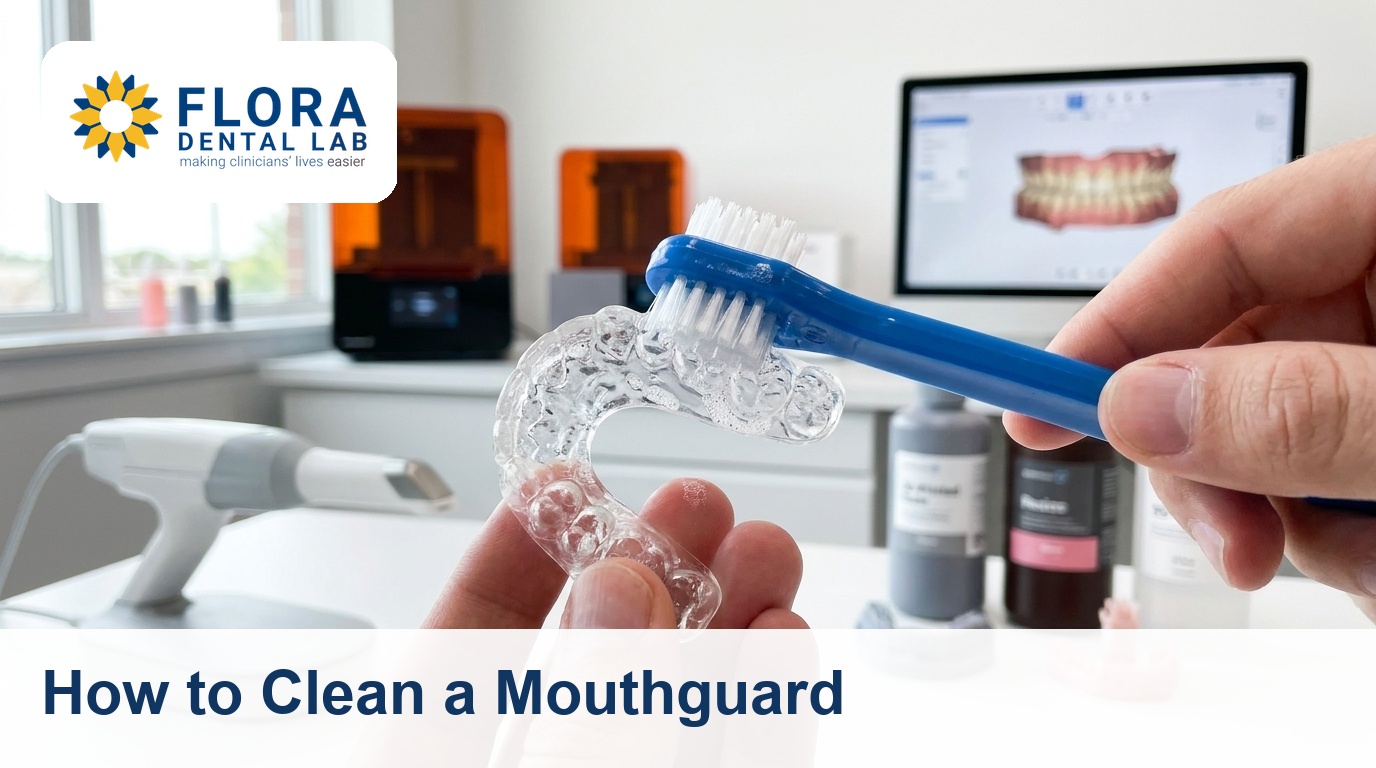
Knowing how to clean a mouthguard keeps a well made appliance comfortable, odour free and serviceable for its full life. Every guard we fabricate leaves the lab clean, but it lives or dies by the patient routine. This guide gives the cleaning, storage and replacement advice to give a patient.
Whether the appliance is a night guard, an occlusal splint or a sports guard, the cleaning principles are the same, and they sit alongside the fabrication and material notes in our night guards and splints lab guide.
Why Mouthguard Cleaning Matters for the Appliances You Send Us For
A mouthguard spends hours in a warm, moist mouth, so it collects saliva, plaque and bacteria the moment it goes in. Left unrinsed, that film hardens into the same calculus you see on teeth, and it bonds to the appliance surface. Once it sets, the patient cannot brush it off, and the guard starts to smell, discolour and feel rough.
Good cleaning is not just hygiene. A guard kept free of buildup holds its fit, stays clear rather than yellow, and reaches the full service life of the material. Poor cleaning is one of the most common reasons a patient returns asking for a remake long before the appliance was due.
- Hygiene: a damp, uncleaned guard is an ideal surface for bacteria and yeast, which can aggravate the soft tissue it sits against.
- Fit: hardened deposits change the internal surface and can stop a guard seating the way it did at fit.
- Lifespan: abrasion and staining from poor care age the appliance faster than normal wear.
The Daily Routine to Give Every Patient
The daily routine is short and the consensus across dental guidance is consistent. Set the expectation at handover so the patient cleans the guard from day one rather than after the first odour appears.
- Rinse on removal: rinse the guard under cool or lukewarm running water as soon as it comes out, to wash off saliva and loose plaque before it can dry on.
- Brush gently: brush all surfaces with a soft toothbrush kept separate from the one used on teeth, using a little mild liquid soap or washing up liquid.
- Rinse again: rinse thoroughly so no soap residue is left to taste or irritate.
- Dry fully: let the guard air dry completely on a clean surface before it goes back in its case, because bacteria thrive in a damp, closed box.
For a sports guard worn during the day, the same routine applies after each session rather than once overnight.
Cleaning a Gum Shield and Sports Mouthguard
A gum shield or sports mouthguard sees harder use than a night guard. It is worn during exertion, picks up far more bacteria from heavy breathing and contact, and often gets dropped on the ground. The cleaning steps are the same cool water rinse, gentle brush and full dry, but the frequency is higher because of the load.
Patients also need a sturdier, ventilated case for a sports guard, since it travels in a kit bag rather than sitting on a bedside table. A vented case lets the guard dry and stops it sitting wet against plastic between sessions.
The materials and fabrication detail for these appliances sit in our sports mouthguards and gum shields guide.
The Weekly Deep Clean
Daily brushing removes the surface film, but it cannot reach everything. Once a week the patient should give the guard a longer soak to lift the buildup that brushing alone leaves behind. Three soaks are widely used, and each works on a guard provided the patient rinses well afterwards.
- Denture or retainer tablet: dissolve one effervescent cleaning tablet in a glass of water and soak the guard for ten to thirty minutes, following the tablet instructions.
- White vinegar: mix one part white vinegar with two to three parts water and soak for fifteen to thirty minutes, then rinse very thoroughly to remove the smell and taste.
- Hydrogen peroxide: soak in a three per cent hydrogen peroxide solution diluted with an equal part of water for around ten minutes, then rinse fully.
Never combine vinegar and hydrogen peroxide in the same soak, and never leave a guard soaking for hours or overnight, as a prolonged chemical soak can degrade some materials.
What to Avoid, and Why It Matters at the Lab Bench
Most premature remakes we see come down to a handful of avoidable mistakes. These are worth spelling out to the patient because the damage is often irreversible once it is done.
- Hot or boiling water: heat warps the thermoplastic and pressed materials we use, so a guard rinsed under hot water or run through a dishwasher can lose its fit in a single wash.
- Whitening or abrasive toothpaste: the abrasives that polish enamel scratch appliance surfaces, and those micro scratches trap stain and bacteria and dull a clear guard.
- Bleach and harsh chemicals: household bleach and strong solvents break down the material and can leave residue against the soft tissue.
- Alcohol based mouthwash for soaking: long soaks in alcohol mouthwash can dry out and craze some materials, so keep mouthwash for the mouth, not the guard.
Storage Between Wears
How a guard is stored matters almost as much as how it is cleaned. The two rules are simple: store it dry, and store it ventilated.
- Dry first: a guard put away wet sits in its own moisture and grows the odour and bacteria the cleaning was meant to prevent.
- Ventilated case: use the rigid vented case the guard came in, not a sealed bag or tissue, so air can circulate and any residual moisture escapes.
- Away from heat: keep the case out of direct sun, off radiators and out of a hot car, since ambient heat alone can distort the material over time.
- Out of reach of pets: a surprising number of remakes follow a dog finding the case, so the case belongs somewhere the patient, and not the household, controls.
When to Replace a Mouthguard
Even with perfect care a guard does not last forever. Cleaning extends its life, it does not make it permanent. Advise patients to bring the appliance in, rather than persevering, when any of the following show up.
- Cracks or splits: any crack, split or thinning worn patch means the guard is no longer protecting as designed and should be assessed.
- Persistent odour or stain: discolouration or a smell that survives a proper deep clean signals buildup the material has absorbed, not just surface film.
- Loose or altered fit: a guard that no longer seats firmly, often after heat damage or natural wear, has lost the fit we built in.
- Rough or distorted edges: edges that have warped or roughened can irritate soft tissue and indicate the appliance is past its service life.
When a remake is due, an up to date digital scan from a 3Shape, Medit, iTero or Dexis scanner is all we need to fabricate the replacement.
Cleaning Splints and Retainers: The Same Principles
The cleaning logic carries across the whole family of removable appliances we make. An occlusal splint, a bruxism guard and a clear retainer all share the same enemies: heat, abrasives and a damp closed case. The patient who cleans a night guard well already knows how to look after a splint or a retainer.
There are small differences worth flagging. Thin retainers are even less tolerant of heat than a bulkier night guard, and some named splint designs have features that benefit from a careful brush around the contours.
For the splint designs themselves see our retainer care guide, and for retainer specific guidance see our retainer care guide.
Sending a Case to Flora
If you want to see the build quality and fit behind this guidance before you commit, your first case with us is free, up to one hundred pounds in value, with no invoice and no contract. Send a scan, tell us the appliance, and we fabricate it the way we would any paying case.
- Scanners: we accept files from 3Shape, Medit, iTero and Dexis, so most digital workflows reach us without an extra step.
- Turnaround: crown and bridge work runs to around ten working days, with appliance timings confirmed per case at submission.
- Accreditations: Flora is a DAMAS registered, DLA member and GDC aligned laboratory, so the appliances you hand a patient meet UK lab standards.
Give your patients this cleaning routine at handover and the guards we make for you will reach the end of their natural life rather than the end of a bad week of care.
What is the best thing to clean a mouth guard with?
For daily cleaning, the best option is a soft toothbrush with a little mild liquid soap and cool water, followed by a thorough rinse and full air dry. Avoid abrasive or whitening toothpaste, which scratches the surface. Once a week, a soak in a denture or retainer cleaning tablet, a diluted white vinegar solution or a diluted hydrogen peroxide solution lifts deeper buildup.
How do you get yellow stains out of mouth guards?
Yellow staining is hardened plaque and buildup that daily brushing has not reached. Soak the guard for ten to thirty minutes in a denture cleaning tablet solution or a one part vinegar to three parts water solution, then brush gently and rinse well. If the discolouration survives a proper deep clean, the stain has been absorbed into the material and the guard is due for replacement rather than more scrubbing.
How do you clean a mouth guard the NHS way?
NHS guidance is deliberately simple and gentle: rinse the guard in cold water before and after use, brush it clean, never use boiling or hot water or any direct heat, and store it dry in its case. The principle is to keep the appliance free of plaque without exposing it to the heat or abrasives that would distort or scratch it.
How often should you deep clean your mouthguard?
Deep clean a mouthguard about once a week by soaking it in a denture cleaning tablet solution, a hydrogen peroxide mixture or a white vinegar solution for ten to thirty minutes, then rinsing thoroughly. Daily brushing removes surface bacteria, but a weekly deep clean targets the buildup that brushing alone cannot reach.
Can you clean a mouthguard with toothpaste?
Use ordinary toothpaste with caution and avoid whitening or strongly abrasive pastes altogether. The abrasive particles that polish enamel scratch the softer appliance surface, and those micro scratches trap stain and bacteria. Mild liquid soap is a safer everyday choice, and a non abrasive paste is acceptable only if nothing more abrasive is to hand.
How should patients store a mouthguard between wears?
Store it dry and ventilated. Let the guard air dry fully after cleaning, then keep it in the rigid vented case it came in, never a sealed bag or tissue. Keep the case away from direct heat, sunlight and hot cars, since ambient heat alone can distort the material, and keep it out of reach of pets. For retainer specific storage, see our retainer care and cleaning guide. retainer care and cleaning guide
