.svg)
Flexible Dentures Explained: A Lab Guide for Dentists
A flexible denture is a removable partial built from a thermoplastic nylon base instead of acrylic or a cast metal framework. This guide covers the materials, the clinical indications, where flexible sits against cobalt chrome and acrylic, and what we need from you to fabricate one well.
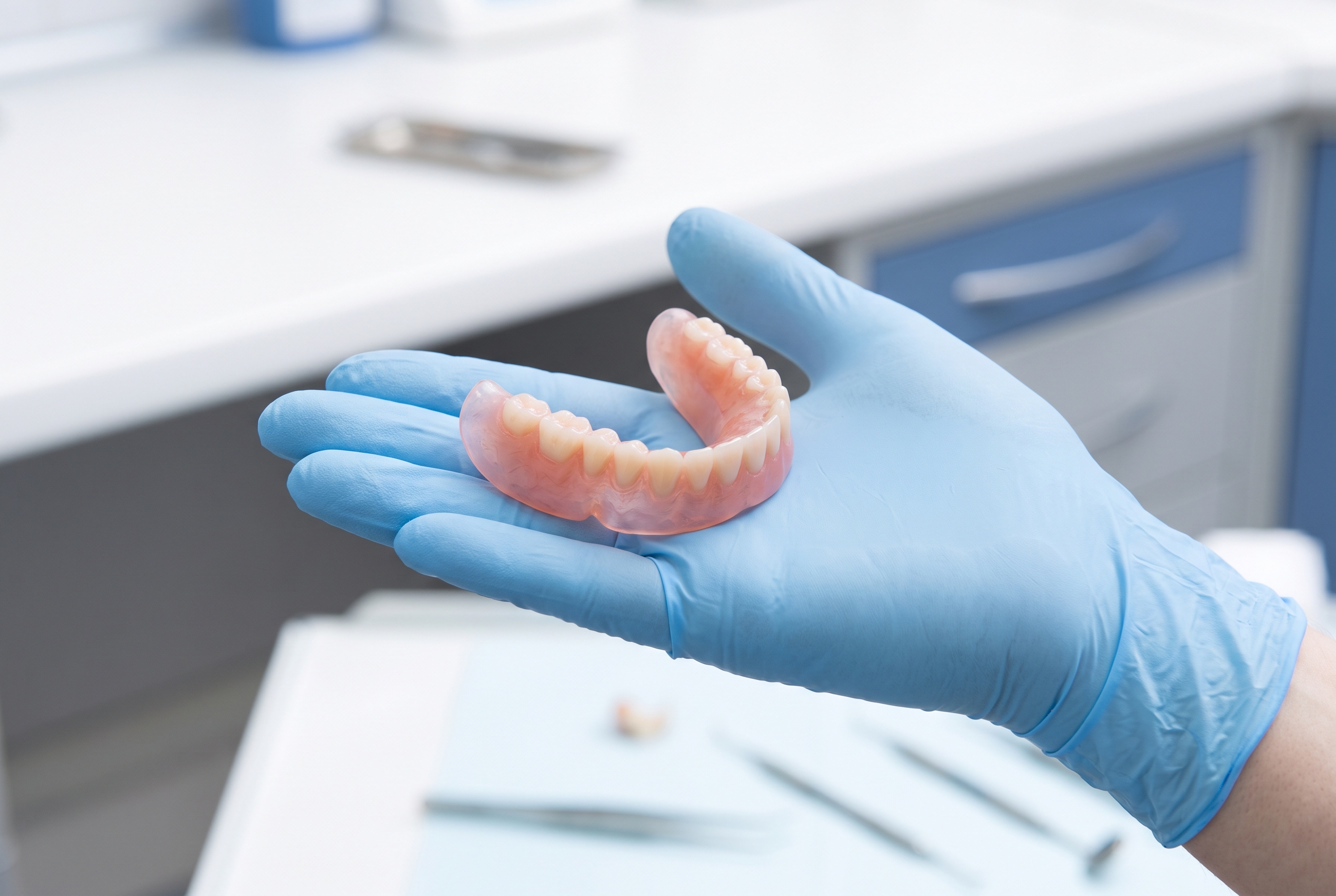
Flexible partials sit alongside acrylic and cast frameworks in our removable range. If you want the wider picture first, see what we offer as a denture lab for dentists.
What a Flexible Denture Actually Is
A flexible denture, sometimes written flexi denture, is a removable partial whose base is a flexible thermoplastic rather than rigid PMMA acrylic or a cast cobalt chrome framework. The base flexes slightly under load and engages tooth and tissue undercuts for retention, which lets us avoid visible metal clasps in most cases.
If a patient asks what is a flexible denture, the short answer is a metal-free partial that uses gum-coloured retentive arms instead of cast clasps. It is a partial solution. Flexible material is not indicated for a complete denture, where the lack of rigidity works against stability and occlusal load distribution.
The category is broader than one brand. Valplast is the best known name, but it is one material among several.
The Materials Behind the Category
Flexible bases are thermoplastics, injection moulded under heat and pressure rather than packed and cured like acrylic. The clinical behaviour depends heavily on which family you specify, so it is worth knowing the differences before you send the case.
- Nylon (polyamide): the original flexible family, including Valplast. Tough, translucent, and biocompatible for patients with acrylic monomer or nickel sensitivity. Harder to adjust chairside and not easily relined or repaired.
- Modified thermoplastics: newer blends such as Duraflex aim for a stiffer, easier to polish base than classic nylon while keeping the metal-free clasping. Adjustment and repair are more forgiving than nylon.
- Thermoplastic acetal: stiffer again, sometimes used for clasps only on a hybrid design. Less flexible, more dimensionally stable, useful when you want metal-free retention with more framework-like rigidity.
Tell us the material when you book. The lab process, the polish, and what you can realistically adjust later all change with the resin family.
For the single most requested flexible material, see our dedicated guide.
We cover the brand specifics, indications, and case selection in our Valplast flexible partials guide.
The Genuine Advantages
Flexible partials earn their place for a defined set of cases, and it helps to be honest about exactly what they do well.
- Aesthetics: no display metal. Gum-coloured retentive arms blend into the tissue, which is the main reason patients ask for them in the aesthetic zone.
- Comfort and weight: thin, light, and the slight flex is well tolerated, especially over bony undercuts that would block a rigid framework path of insertion.
- Biocompatibility: metal-free and monomer-free options suit patients with confirmed nickel or acrylic sensitivity.
- Undercut engagement: the flex lets the denture seat past undercuts that a cast framework cannot use, often without surgical or restorative pre-treatment.
The Trade-offs You Should Flag to the Patient
The recurring SERP question is what are the disadvantages of flexible dentures. The limitations are real and clinical, not cosmetic, so they are worth setting out before the case is planned.
- Adjustment and reline: nylon bases resist conventional chairside reline and reline material rarely bonds reliably. Tissue change often means a remake rather than a chairside fix.
- Repair: adding a tooth or repairing a fracture is far harder than with acrylic. Plan for replacement over modification.
- Load distribution: without a rigid major connector the denture is tissue-borne, so it transmits more load to the mucosa and offers less support than a cast framework on a long span.
- Polish and plaque: nylon can roughen over time and hold plaque, so patient hygiene instruction matters.
None of this rules flexible out. It just means it is a tool for short spans and aesthetic clasping, not a default for every partial.
Flexible vs Cobalt Chrome
This is the comparison that decides most cases. A cast cobalt chrome framework is rigid, tooth-supported through rest seats, and built for durability and long-span support. A flexible base is tissue-borne and built for aesthetics and comfort on shorter spans.
- Choose cobalt chrome when: the span is long, you want rest seats and defined support, the case needs precise occlusal load control, or the denture must last and be relinable over years.
- Choose flexible when: the gap is short, display metal is unacceptable in the aesthetic zone, undercuts block a rigid path of insertion, or the patient has a metal or monomer sensitivity.
If rigidity and support are the priority, the cast framework is the right referral. See our cobalt chrome partial denture process
Flexible vs Acrylic
Acrylic partials are the cheap, fast, easily adjusted baseline, often used as transitional or immediate dentures. The flexible question against acrylic is usually about aesthetics and comfort rather than support.
- Acrylic strengths: low cost, simple to reline and repair, quick to add teeth, ideal as an interim or healing denture.
- Flexible strengths: no metal clasps, thinner and lighter, better tolerated over undercuts, and a more natural look in the smile line.
- The honest middle: for a definitive partial where the patient accepts visible clasps, an acrylic or cast option is often more maintainable. Flexible wins where the clasp must disappear.
Case Selection: When Flexible Is the Right Call
Flexible teeth partials work best in a fairly narrow band. The clearest indications keep the span short and the aesthetics high.
- Kennedy Class III and IV: bounded saddles and anterior aesthetic gaps where retentive arms can hide in the tissue.
- Single tooth or short span: one or a few units replaced where a tissue-borne base is acceptable.
- Allergy cases: confirmed nickel or acrylic monomer sensitivity that rules out cast metal or conventional acrylic.
- Pronounced undercuts: where flex allows seating without crown lengthening or restorative blocking out.
For free-end distal extensions and long spans, point the case toward a cast framework instead. Tissue-borne flex on a long lever rarely serves the patient well.
What We Need to Fabricate One Well
Flexible cases are unforgiving of vague prescriptions because the material cannot be heavily adjusted afterwards. A clear scan and a clear instruction sheet do most of the work.
- Impression or scan: send a full-arch and opposing scan. We accept files from 3Shape, Medit, iTero, and Dexis, or a quality conventional impression.
- Material and brand: specify the resin family, since adjustability and finish differ across nylon and modified thermoplastics.
- Shade and clasp design: tooth shade plus where you want retentive arms and how much tissue coverage the patient will accept.
- Undercut survey: flag the undercuts you want engaged so we set the path of insertion to use them.
We are a UK lab working with UK practices, accredited to DAMAS, DLA, and GDC standards, with a crown and bridge turnaround of around ten working days. Removable timelines vary by case complexity, so ask us when you book.
First flexible case is on us, up to GBP 100, with no invoice and no contract, so you can judge the fit and finish on a real patient before committing.
If the same patient also needs fixed work, we can run it alongside the partial through our crown and bridge service.
What are the disadvantages of flexible dentures?
The main drawbacks are clinical, not cosmetic. Nylon bases are hard to reline or repair, so tissue change usually means a remake rather than a chairside adjustment. They are tissue-borne, so a long span transmits more load to the mucosa than a rigid framework, and the surface can roughen and hold plaque over time. For short aesthetic spans they remain an excellent choice.
How do flexible dentures stay in?
They stay in through gum-coloured thermoplastic arms that flex past and engage natural tooth and tissue undercuts, rather than rigid cast metal clasps. The slight flex of the base lets the denture seat over undercuts that would block a cobalt chrome framework, which is part of why no display metal is needed.
What is a flexible denture made of?
A flexible denture is made of an injection-moulded thermoplastic, most commonly a nylon polyamide such as Valplast, or a modified thermoplastic such as Duraflex. These resins are metal-free and monomer-free, which suits patients with nickel or acrylic sensitivity. We cover the material specifics in our Valplast flexible partials guide. Valplast flexible partials guide
Is a flexible denture better than cobalt chrome?
Neither is better outright; they solve different problems. Cobalt chrome is rigid and tooth-supported, built for long spans, defined support, and long-term relinability. Flexible is tissue-borne, built for aesthetics and comfort on short spans and over undercuts. For a long free-end span we would recommend the cast framework. cobalt chrome partial dentures
Can a flexible denture replace a full arch of teeth?
No. Flexible material is indicated for partial dentures only. On a complete denture the lack of rigidity works against stability and even occlusal load distribution, so a conventional acrylic or cast solution is the correct choice for a full arch.
How do I send a flexible denture case to Flora?
Send a full-arch and opposing scan from 3Shape, Medit, iTero, or Dexis, or a quality conventional impression, along with the resin family, shade, and clasp design you want. Your first case is free up to GBP 100 with no invoice or contract. We are a UK lab accredited to DAMAS, DLA, and GDC standards. our denture lab service